Bearing fruit

Today, we conclude our last public event for the year. Exhibitions turned out very fruitful about contacts with new people who are interested in the topics and needs we are preoccupied with.

Unfortunately, the gallery guys didn’t want us to be in their way and we couldn’t really meet our visitors but on Friday I decided to persist. For 3 hours I met a retired teacher who worked 20 years in a kindergarten in Stolipinovo, a young couple from the Stolipinovo who were really keen to get involved in initiatives with arts and culture in their community, and a recent young teacher in a minority school in Sofia who is trying to break out of the traditional system and invited us to help her with new initiatives for her students there.

Interestingly, both the local couple and the retired Bulgarian teacher made a similar point to me, maybe influenced by our Vol. 4 exhibit. They shared stories about how people in the neighbourhood always try to do something nice for you. The teacher told me how she noticed that when she was getting a coffee on the street in Stolipinovo, the person always put for her half a spoon more ground coffee. When she thanked for that, the woman said “Of course – for the mualima! Now you are going to teach our kids whole day!”

(I happen to know from Arabic that “mualimah” means “teacher”.)

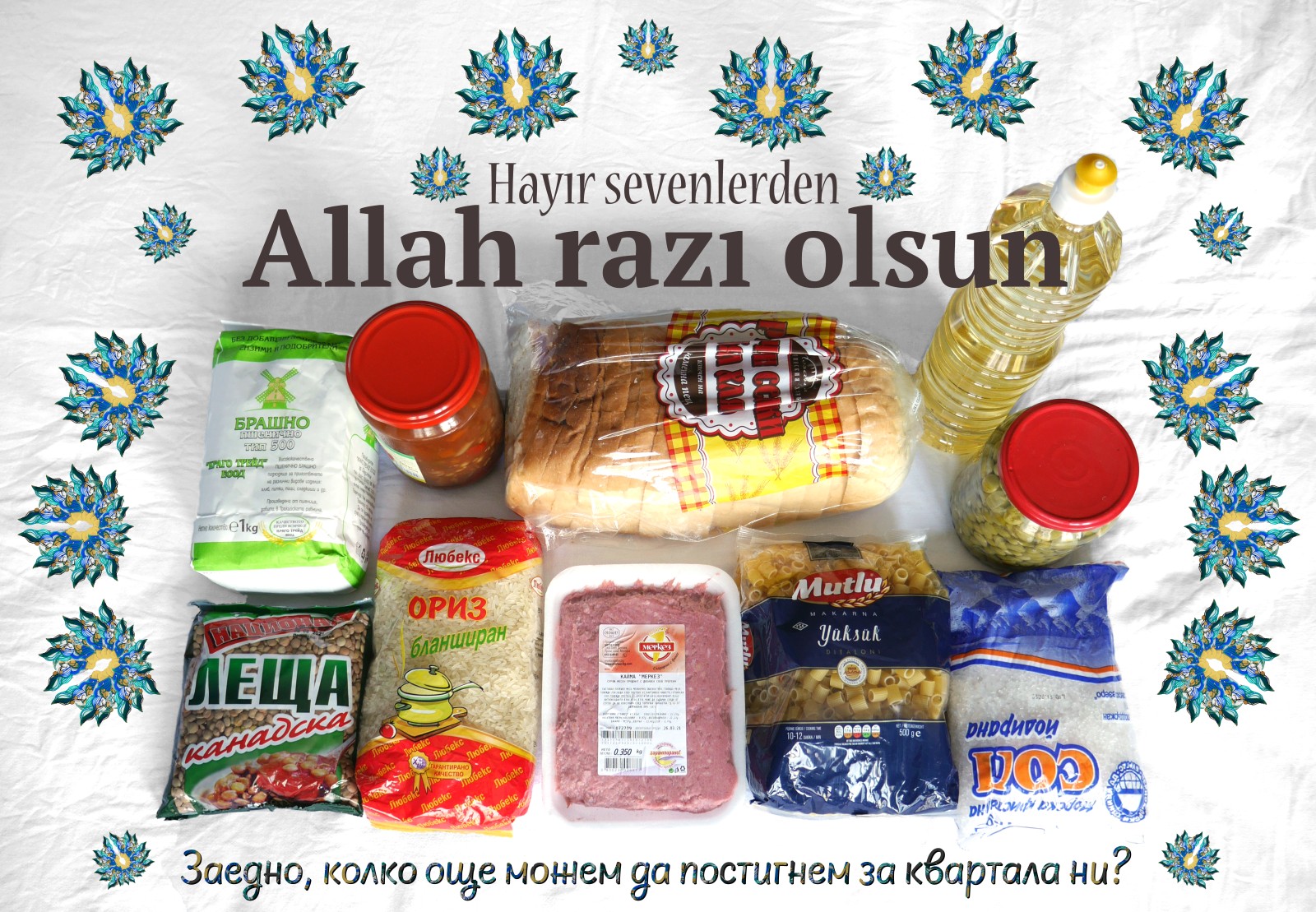
Allah razı olsun

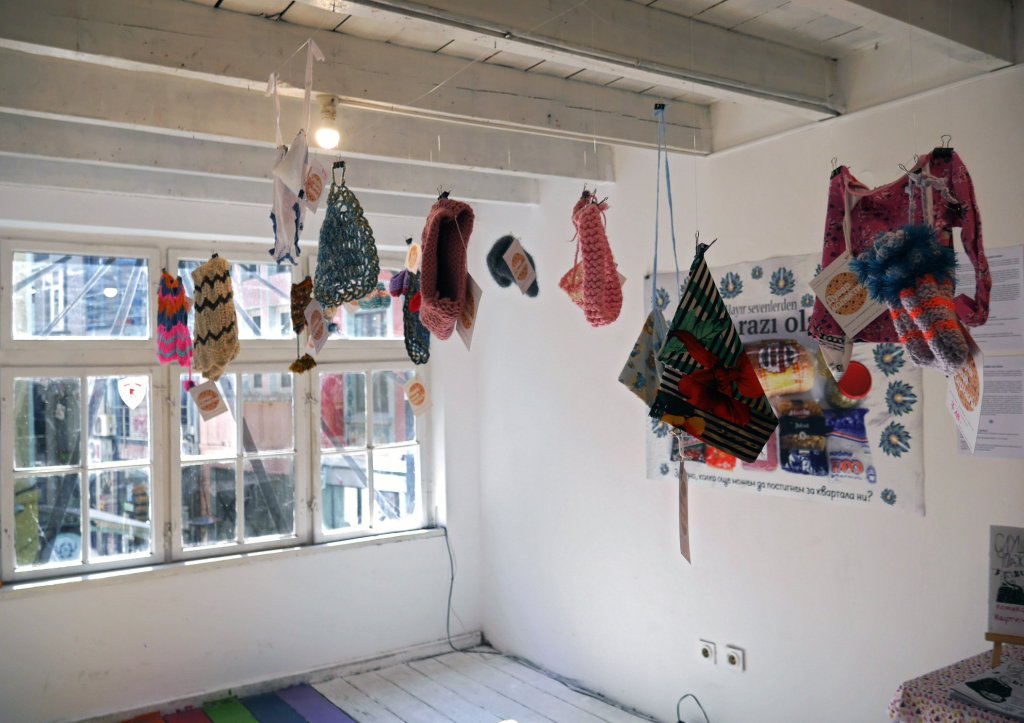
Here is the 4th volume of Duvarmuzei – a new addition to the Plovdiv exhibition which you didn’t have the opportunity to see in Sofia.

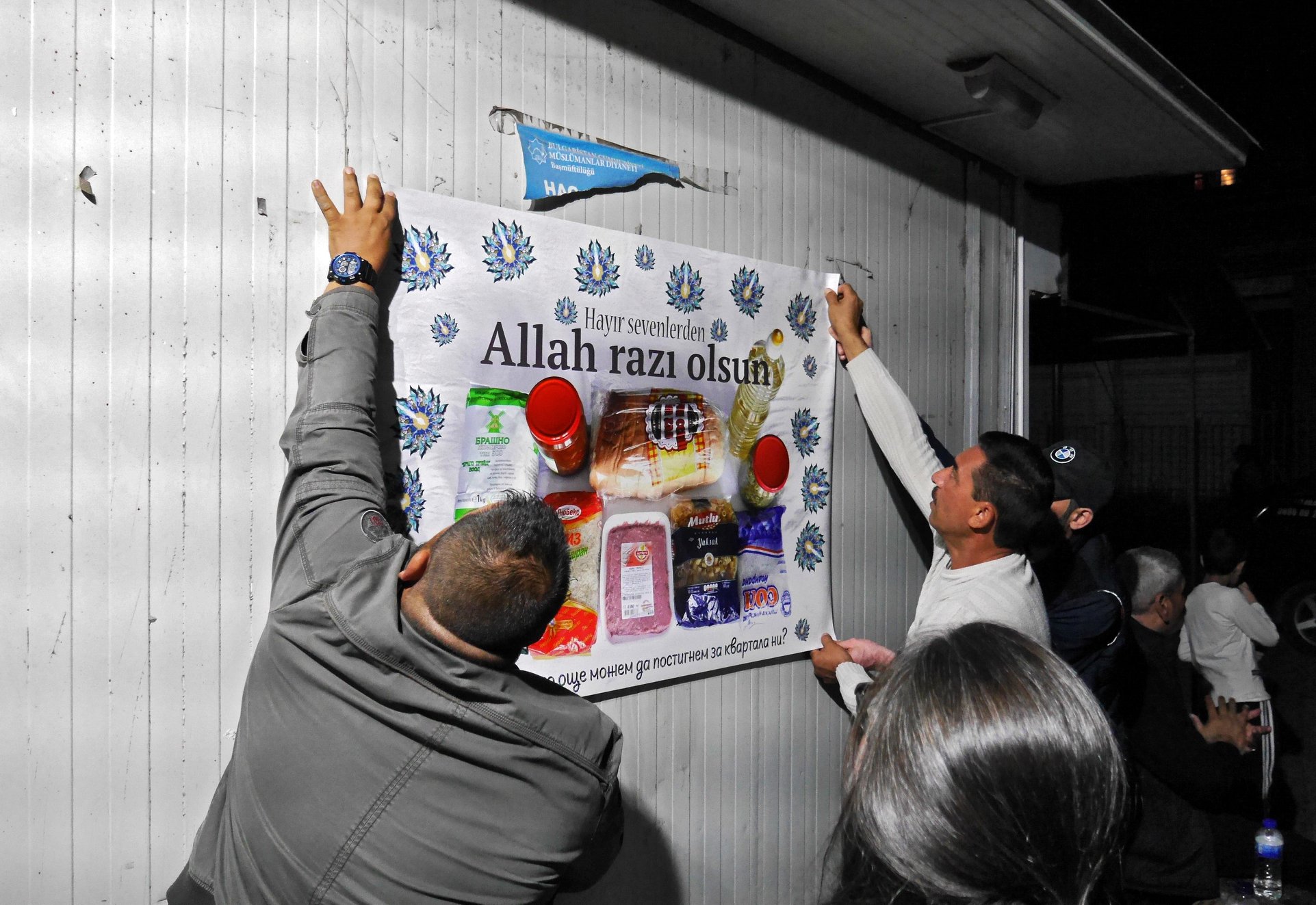
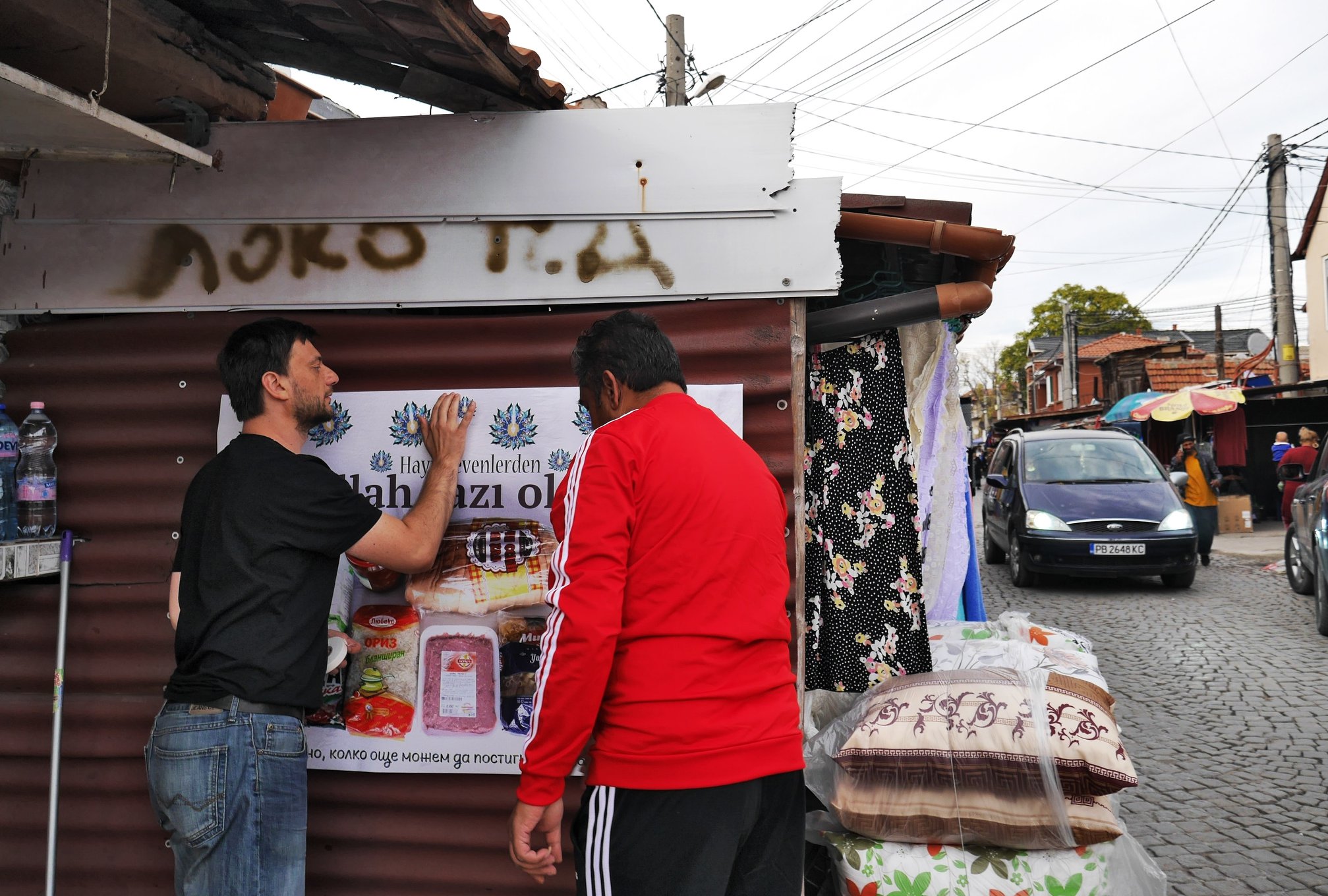
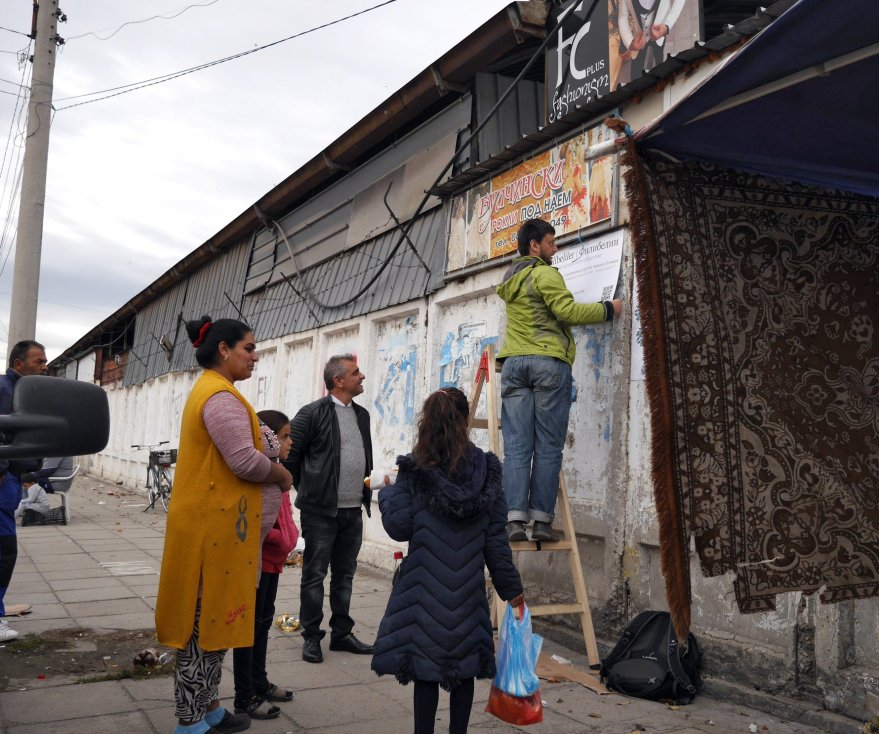
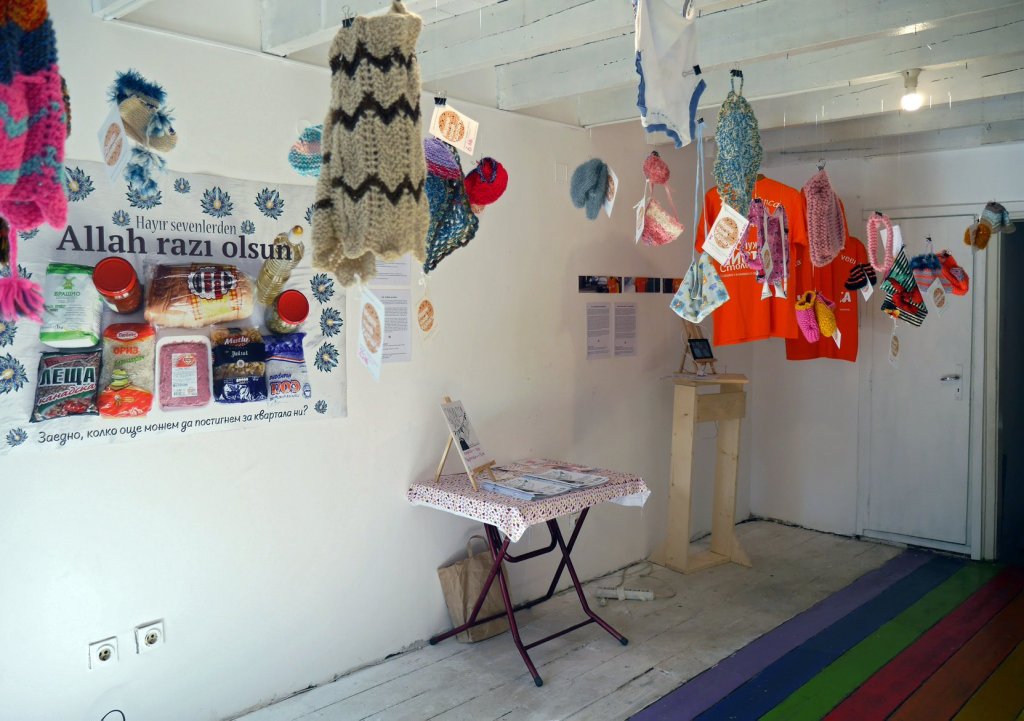
Last evening we were setting up the poster-monuments “Allah razı olsun” at five sites in the neighborhood, with the help of a number of friends. These are memorials for the community’s achievements this spring when tens of grassroots initiatives helped with food those families which didn’t have any left.

The preliminary conversations about the setting up of the posters, and more generally, about the point of art and art-interventions, became the focal point of many new acquaintances and maybe emerging partnerships for our initiatives in Stolipinovo? They begin with a minute of silence after we explain our poster intentions, then followed by “It is very good what you are doing!”, and then sometimes with “What do you think about this idea I’ve had…”?

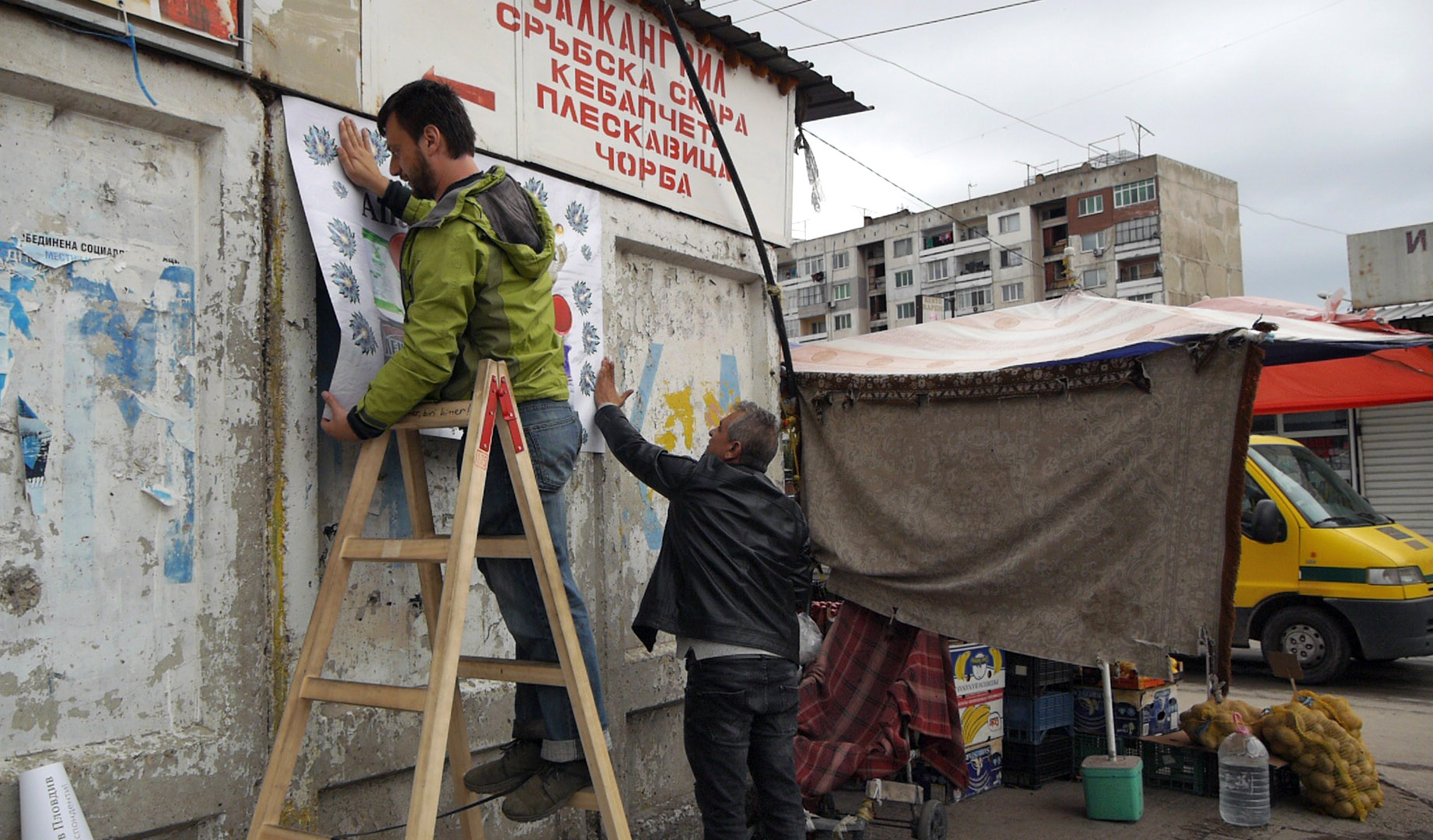
For example, with owner/manager of the covered market in Stolipinovo, we came up with the idea for a drop-in office there of the Filibeliler media, for those without internet who want to submit signals and news proposals to the “neighbourhood’s newspaper”. So, with the last bits of Duvarmuzei’s budget I printed out a sign for the office and a week later we put it up just next to the guy’s “Balkan Grill” one. 😉

Cleaning Agency

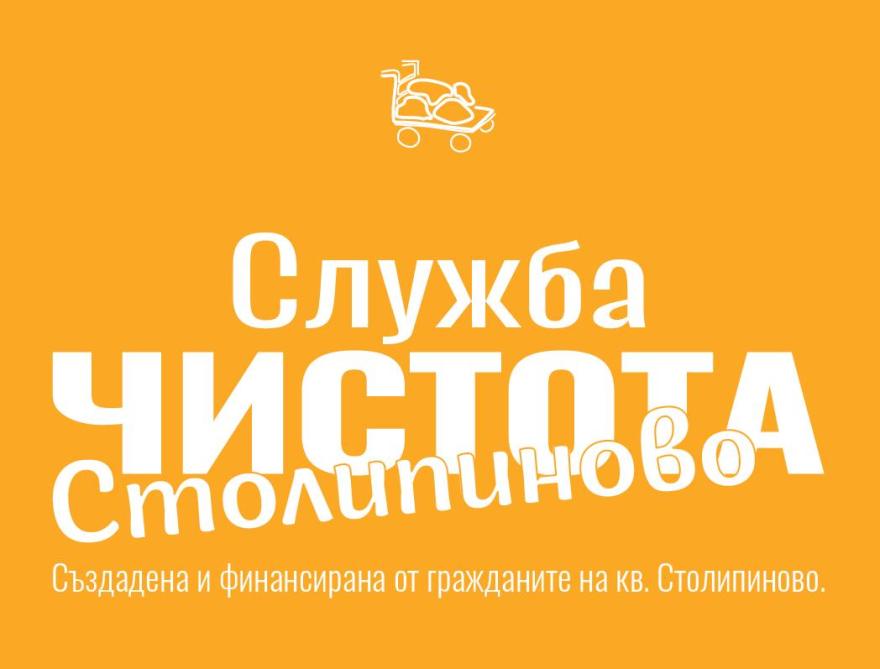
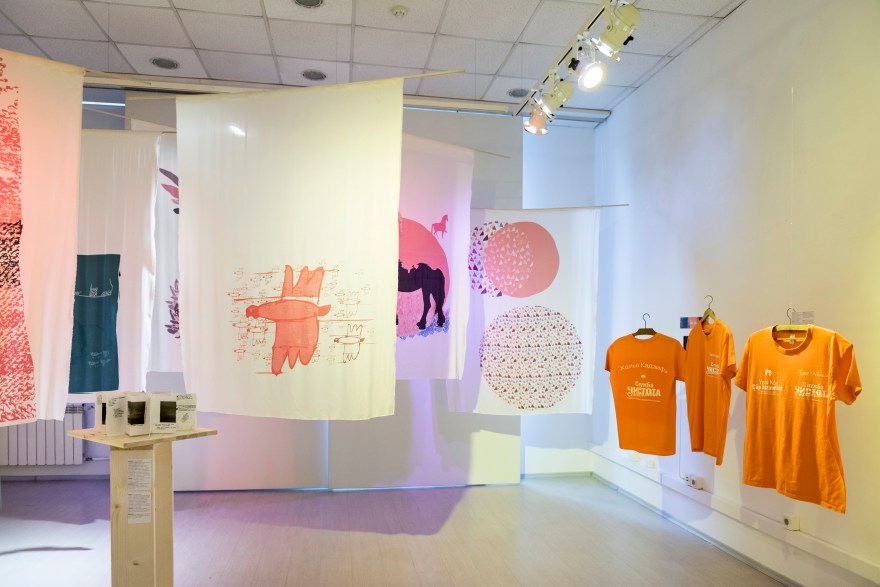
The exhibition in Sofia is a sort of retrospective, but we are showing also entirely new work from just this month! One example is the intervention Duvarmuseum Vol. 3: “Stolipinovo Cleaning Agency”. Can you guess what is it about?


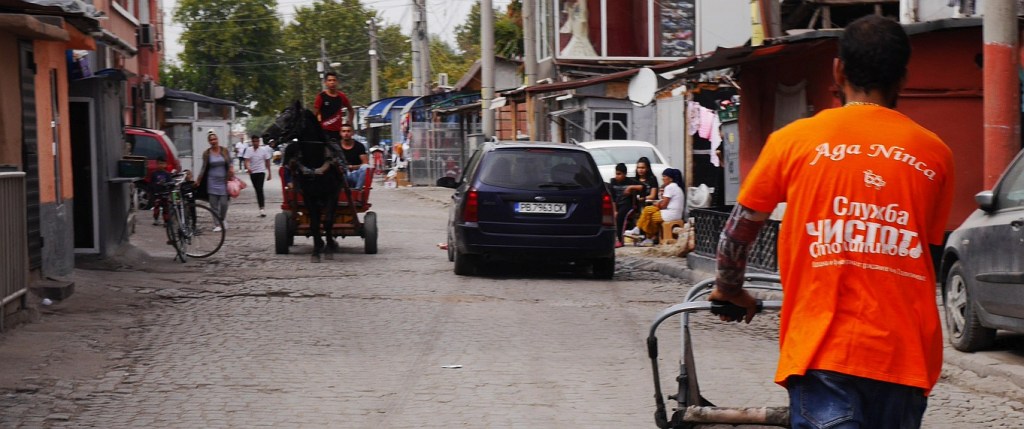
And here is the answer to the orange puzzle from two weeks ago: an attempt to bring recognition to the lads that collect everyone’s household bins for a 0,50 lv fee. They cover the entire district, yet for an outsider are very difficult to locate, always on the move. For a few weeks of frequent visits, I got to talk to four of them and supply seven with personalised (un)official work clothes (for some i managed to meet only their parents).

It was a great joy! And a bit of complaining that the letters were not all capitals. 😉

Household waste in Stolipinovo and in other dense segregated neighbourhoods in Bulgaria is a burning issue for both inhabitants and the general public, as media depict those communities as inherently “filthy” and undeserving of the services they receive. In fact, municipal services in those neighbourhoods are meagre and communities have often self-organised to resolve the issues they face on a daily basis.
The municipality have placed only a few sites for garbage bins in a district with over 40,000. This is when the community’s very own Stolipinovo Cleaning Agency comes to the rescue! These lads make rounds every day throughout the district collecting the household waste, and delivering it to distant trash sites. This is how the community maintains its own communal service – a household pays these workers around 25euro cents per visit.

Guest lecture

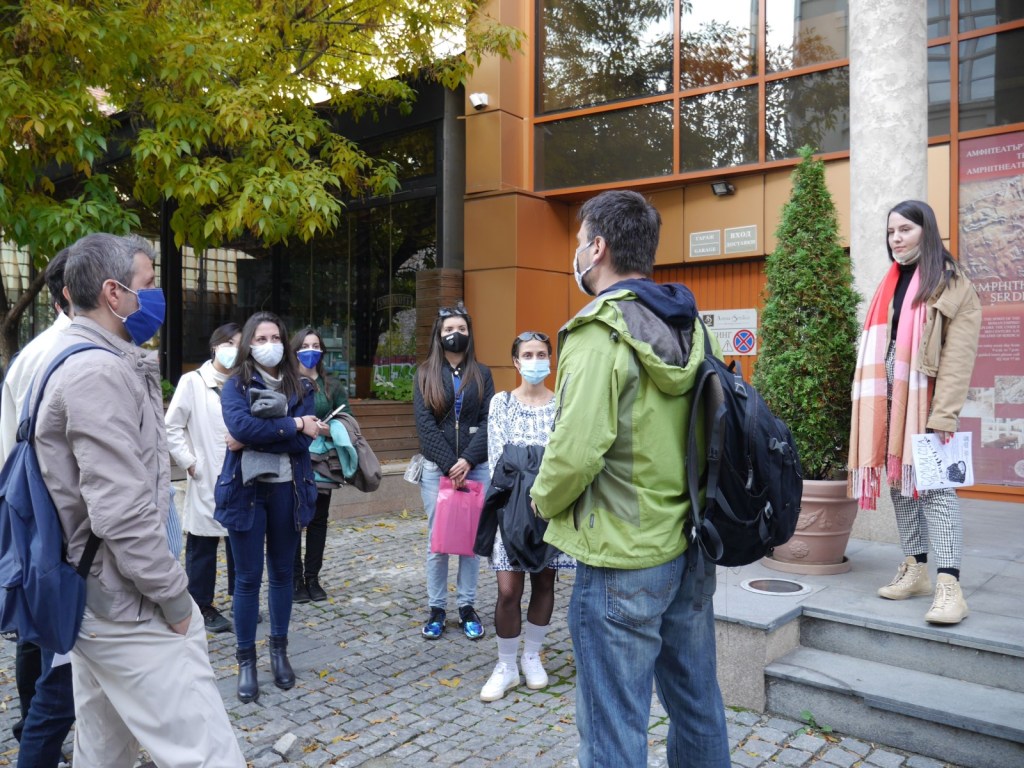
At the street by Goethe-Institut Sofia yesterday, I tortured quite deeply interested in our work students of Cultural Studies and master students in Cultural Anthropology.

Appreciation to their professor, Velislava Petrova, who invited them to see our exhibition.

To one of their questions I answered: Yes, I do hope that anthropology could not only take from the communities that it sets off to study, but also to give back to them. The trials we do through the Duvar Kolektiv format are just one of the possible ways to do that. You will discover further ones!

Big exhibition

On the 29th, Tuesday, we open our first exhibition in Sofia, invited by Goethe-Institut Bulgarien!

You are welcome from 17:30 on and do bring your masks. There will be no speeches this time but we will be around and available for a chat (and later for a drink).

We will show something from all our projects since 2018 till now – Plias, Listen Now Son, The Beauty We Share, Duvarmuseum Vol. 1 – as well as the newest initiatives, part of Duvarmuseum, which are being cooked in this very moment!

Participatory indeed

Dear friends,

We are looking for how to name the initiative of next year. This time we decided that Duvar Kolektiv should recede to the background and leading authors should be a group of men from Stolipinovo. We saw those guys grow as community figures in front of our eyes during this year of lockdown and hardship. Now they’ve set up a formal organisation “Residents of Stolipinovo”, and we are going to support them.

We came up together with three things we want to make happen in 2021 in the cultural-artistic sphere:
1. An open doors day plus an audiowalk for one of the mosques in the neighbourhood that has a very interesting history. Leading author: Selim.
2. Small documentary film for craftsmen in the neighbourhood. Leading authors: Osman and Ismail.
3. A singing and music competition for Stolipinovo people taking place in Facebook. Leading author: Abdulsamed.

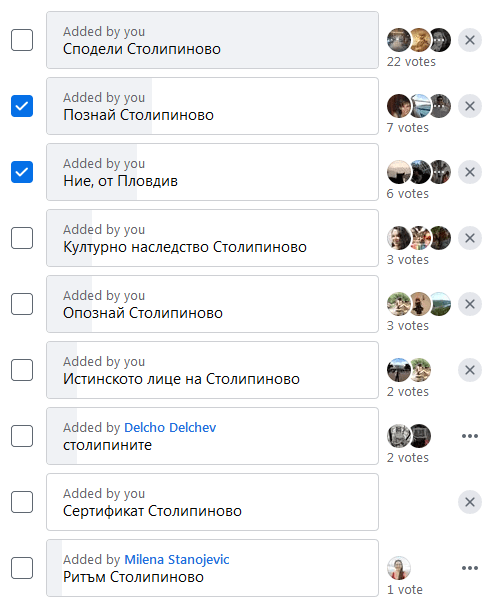
We are now in a dilemma what kind of name to put on the whole block. We are not very experienced with branding and public presence yet. Here is the ideas that we came up with but what do you think, as our privileged audience?

Poll results:

Therefore, our project now is happily called “Share Stolipinovo”! Unfortunately, the mosque project was cancelled.

Invitation in Turkish

With lots of sweat and effort Yanka and me, with the help of B., managed to compose an invitation in Turkish for the opening of our exhibition tomorrow, Duvarmuzei Vol.1: “Hand-made”. We made it in the local dialect, milletçi, so Yanka’s fellow neighbours can easily understand it.

It was a complex process! I was explaining what it is all about. How could Yanka imagine her addressing some people she’s never met and doesn’t know?
“Aha”, said she, “this is like an açılişıma, like when you start a new shop of yours!” Then we set out on figuring out what is the Bulgarian word for that açılişıma thing. We found it – “opening”.

The next steps to decide were what should she tell those unfamiliars? Suddenly all these things seemed to me very fuzzy and unclear, and I didn’t know either how to explain them to Yanka!
But she was getting inspired, “Yes, yes, yes, how it is ‘all’ this, how ‘the whole’…” – sometimes she didn’t know the words to put to meanings, in either language. She described them to me in a roundabout way as abstract processes, so that we can find the name for them.

After that we needed to turn it into Turkish. However, Yanka could write only with Bulgarian letters – that’s what she had learned in her six years of school long ago. For this reason she was dictating to her daughter-in-law, B. who, being from the young generation, knew the Turkish alphabet from chatting on the phone and from the Internet.

In yet another step we reversed everything back to Bulgarian so that I can check that the meaning hasn’t run away someplace else. And so it went along for an hour.

We wrote as much as we could and in the way we could. As Yanka put it with a laughter, “From five words we say, we write down one!”

However, I think that the result is not bad at all. Besides, in this process the three of us learned much more than a thousand words!

Here is it, with the back translation:

Hoşgeldiniz! Seviniyos ani geldiniz bizim açılişımiza „Еlde işlenmelere”.
Welcome! We are happy that you came to our opening “Hand-made”.

Bünları biz örüyos Minka Fatmiş. Hana ve Kolyo bize yardım ediyo açılışa.
We, Yanka and Maria, knitted these. Hannah and Kolio helped us with the opening.

Biz uraşıyoz gösterelim böyle güzellikleri okumamış insanlarında yapabildiyini. Akıl ve istek gerek.
We endeavoured to make these beautiful things in order to show that even we, people who have not studied, can achieve anything. It just requires wits and will.

Biz teşşekür ediyos Hanayla Kolyoya bu kariyeri yürüttükler için. Bizi için önemli çünkü bu iş zakonno.
We are very grateful to Hannah and Kolio, that they helped us make a step forward in our profession.
(Yanka kept putting this sentence in as I tried to drop it!) For us most important is that it is something legal to do.

Buyrun gelin. Başlayo salıdan ot 6 ças.
Welcome in Tuesday from 6 o’clock.

Biz üraşıyos bügözel renklerle sizdısizin yaptıklarnızla yapabilirsinis danada gözel şeyler.
We put a lot of effort to make these beautiful things even prettier, we hope that you would also do better that which you can do.
The first video reportage!

Vol. 3 of Duvarmuzei will consist of video pieces of reporting from the neighbourhood, which we are making collaboratively with Filibeliler and other local volunteers.

The video clips will showcase neighbourhood discussions that are important for residents. Duvar Kolektiv would be supporting with the technical production: esp. editing, the final directing and then the communication.

The first video is here – by Ismail Sherif.

He shot it with his phone over one day. It took also a week of research. Personally, I was surprised and impressed by Ismail’s sense of dramatization, energy and rhythm! I hope you will like it too. Accompanying the video, Ismail wrote also a text article for the neighbourhood media.

Заснет е с телефона, в продължение на един ден, но и след проучване продължило почти седмица. Мен лично Исмаил ме изненада със страхотен драматизационен усет, раздвиженост и чувство за ритъм!

Надявам се, че ще ви хареса! Към видеото Исмаил написа и цяла статия.

[Update: At the end, the idea for a number of video reporting pieces didn’t get realised, but this clip still is part of Vol. 3, whose topic we restricted to the discussion about the rubbish.]

Smileys on the holiday

Dear friends, salutations with the Bulgarian holiday of Letters and Enlightenment (St. Cyril and Methodius)!

For Duvar Kolektiv this is also a special holiday of ours since we’ve made it our job to open cracks through the thick shadowy walls (duvars) erected by our society and to let through the light of knowing one’s fellow!

In Stolipinovo the holidays are two! The people are feasting and hosting guests. It is Ramazan Bayram (Eid al-Fitr), the crown of the holy month of Ramadan, during which Muslims are encouraged to put extra effort in gaining blessings by Allah through good deeds.

To the Turkish friends of yours you can say today “Hayırlı Bayramlar” (that’s the simplest one I heard).

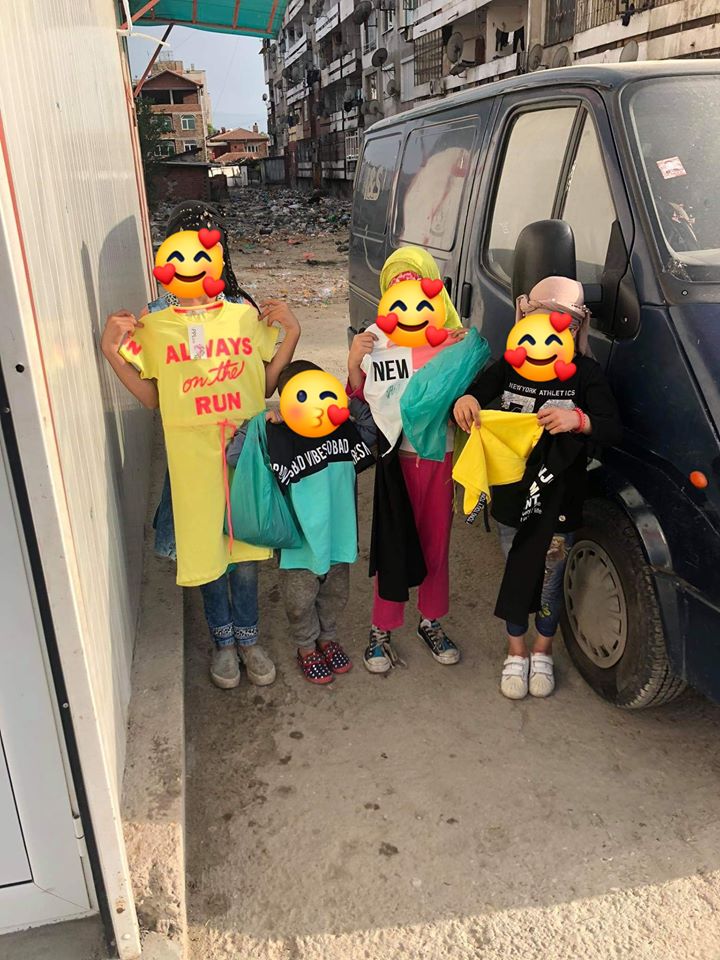
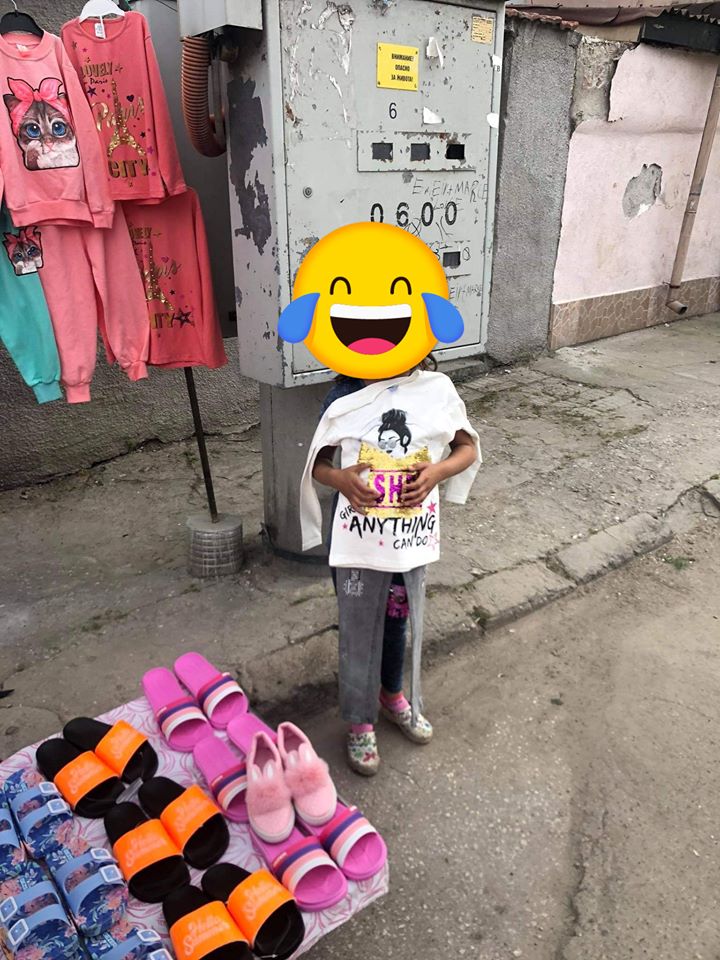
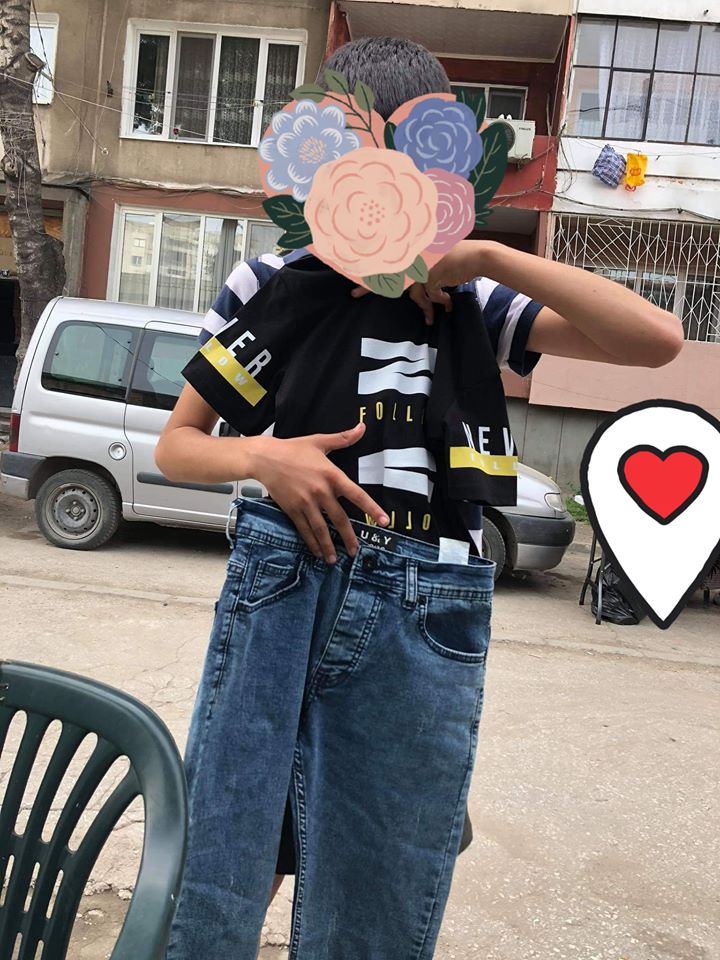
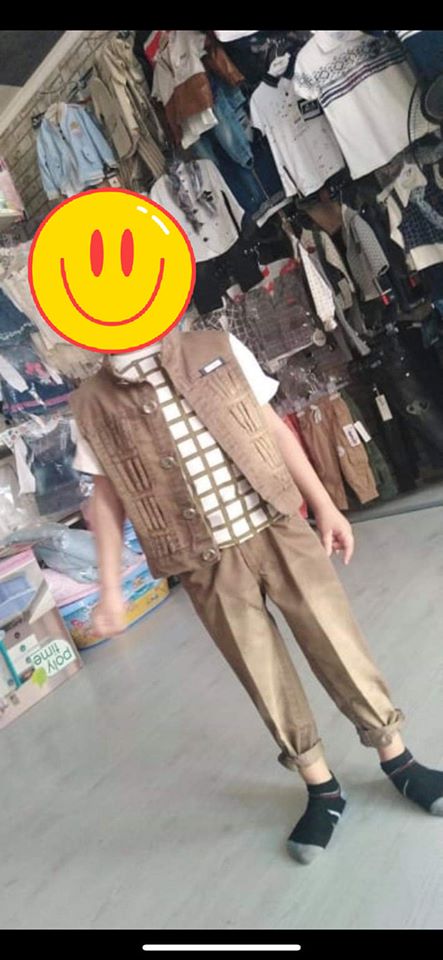
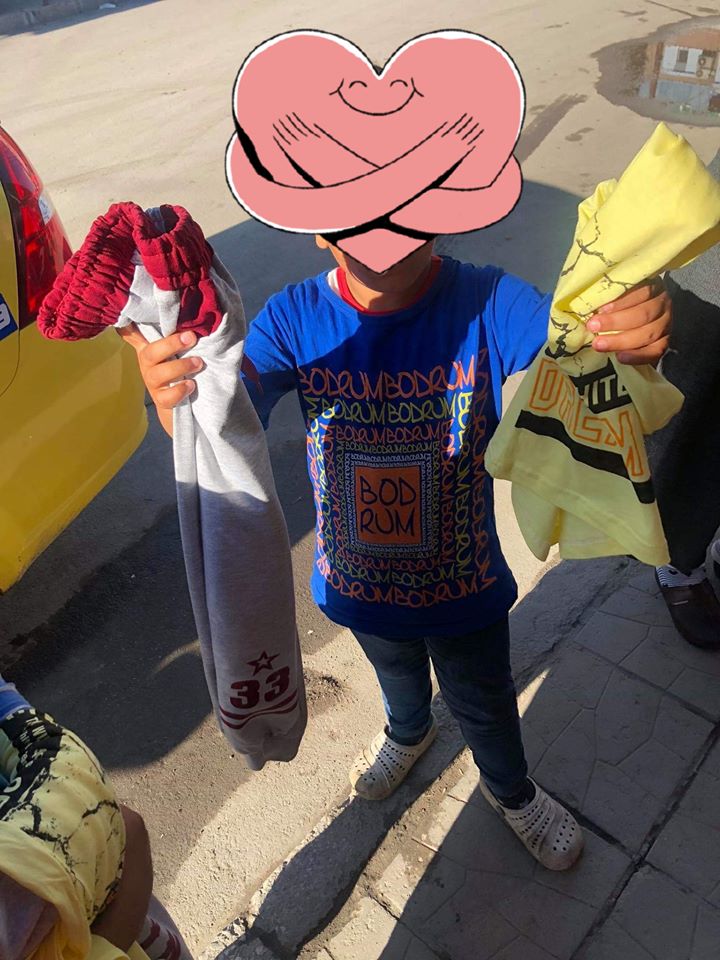
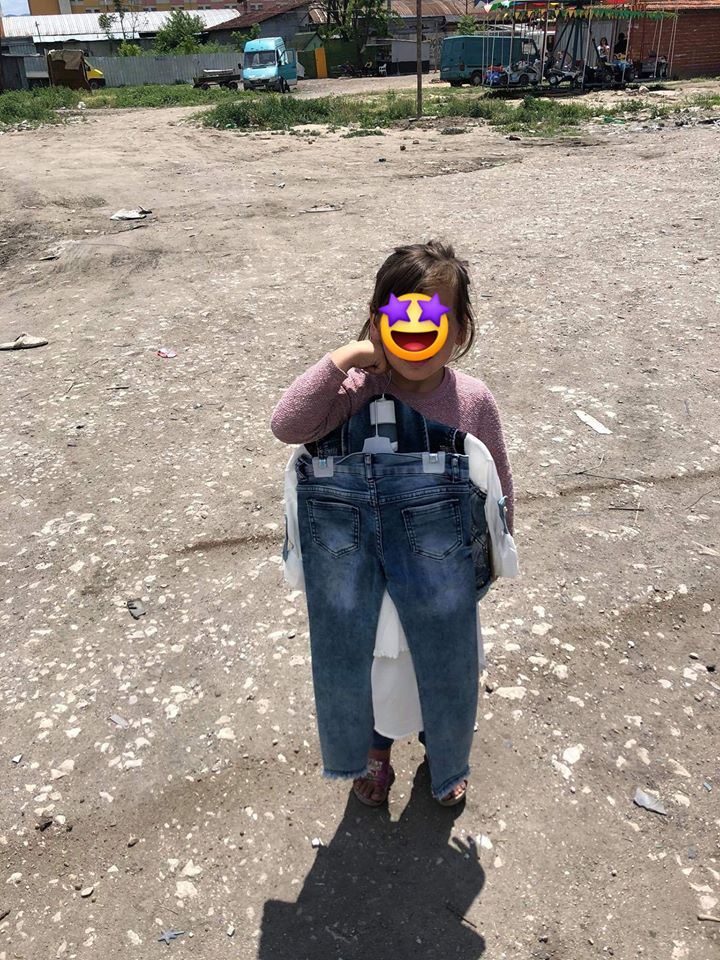
Yesterday, locals went to the market together with orphans and children of poor parents and bought each kid a new set of clothes. These are the pictures I collected from Facebook, fittingly decorated by diverse smileys!