
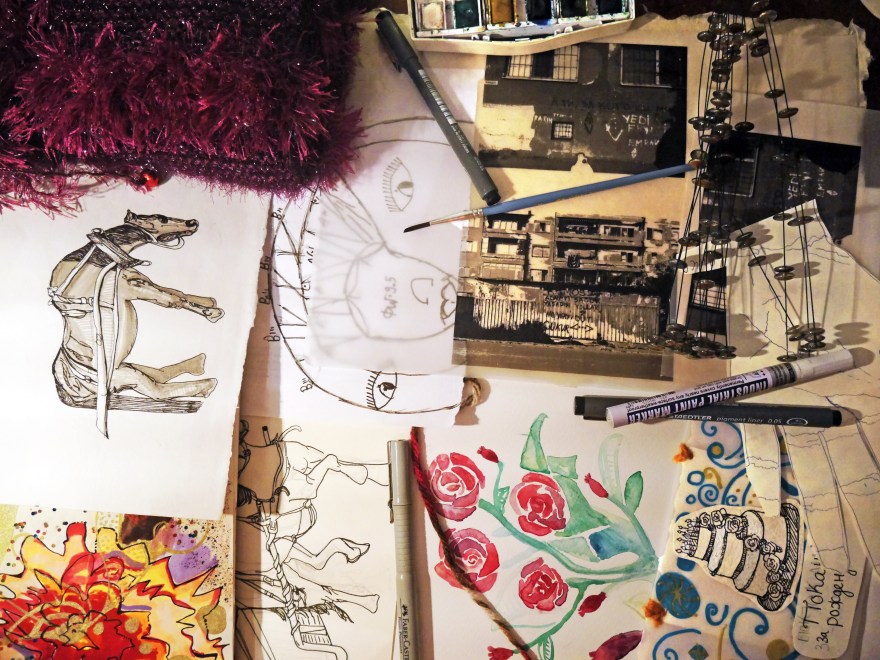
We got a wonderful journalist to do an interview with us, Zornitsa Hristova! She had also visited the community we are working with, and she wrote this additional commentary on her FB wall which we love.
The interview is in Bulgarian, but since, of the two of us, Hannah responded in English, it is possible to publish here her part of the conversation:
Zornitsa: How do you convince people to let you in their homes, how much time does it take for them to open?
[Kolio’s answer in Bg omitted, then Hannah:]
This relates to also the previous and the next question. I remember when we went first with the Mobile School there was one family that came to talk to us. We were in the meadow, and there was a mother and daughter who came around to see what we are doing, and asked the usual questions. The girl invited me to give me a tour around the neighbourhood, and her brother was playing badmington. It was a very small tour, just around a few streets. And then after that her mother invited us in the house, and asked us if we want coffee. So there was a kind of enthusiasm to be hospitable to us from the first time we went there. For this reason, with that particular family, it wasn’t difficult to be invited in the house, as guests. And then we decided to try and do a more personal, long-term, in-depth project in the neighbourhood, starting with that family. Because the Mobile School was really great at getting lots of children involved in doing art and things, but it is only for an hour a week. And when we did the first project, the hand-clapping project, it was again, we were invited into the house and we ended up staying like 4 hours I think, drinking coffee and chatting, and getting to know the father and stuff, and one of the girls said she wanted to be an artist in the future and so we kind of build the project from, like, adapting to what people wanted to do. And the mum kind of took pity on me (laughs), and was teaching me how to speak Turkish, and was really patient when I was having difficulty with Bulgarian. She was teaching me how to knit, how to do nail designs – she really… I just want to say that the family kind of chose us, rather than us going….
You say that a part of your work is about finding a common meaning – what is beautiful, what means mastery, originality, skill. Do you think joint work draws together understandings about these notions in a sustained manner, or it is just intersections in a given moment?
[Kolio’s answer omitted]
Yeah, you can kind of see it when girls in the neighbourhood started to cut fringes and their hair after they saw mine, and they are asking their mums, can I have a hair like Hannah (laughing). And then we saw lots of these little girls who are like 7 or 10 have this fringe. Which doesn’t mean that they didn’t think it was beautiful before, but it was like a fashion. Which is how sometimes things happen.
For whom of the participants in the process is important the gallery space, which is the final destination of your works?
I think a lot of people in Stolipinovo don’t live in a vacuum. They’ve been to the centre, they’ve been to the old town, to museums and galleries, especially when at school. So people know what a gallery or a museum is. Or café. Or they were to, like, Germany or France and seen stuff. And there is a great art teacher in the school who works a lot with children doing artworks. So I think people understand what a gallery is. In a different way, maybe, from us.
When we had the first exhibition [Пляс! / Slap!] we had 5 people of the family we worked with, who came. Everyone got dressed up, they even found some nicer shoes from the neighbour. Once there, we bought everyone a coffee or hot chocolate, did a presentation, had a slide show, showed around the exhibition. Even, the people from the community joined in this kind of ice-breaker game that we did. We played some nice music that the girls have selected. In my opinion it was a nice way for people to show off, or feel proud of something – to Bulgarians. There was a point when they were teaching Bulgarians how to do things. This was a kind of first step, because this family have never been to an exhibition before. And when next year we did an exhibition in the neighbourhood [Listen now, chodjum] our host was excited and we were having some food and drink, and he was saying to everyone, “Look it’s like in the Old Town!” – the art galleries and museums there. So, yeah, there is a kind of understanding about it. And there is an to be cultured, to show that you are cultured Bulgarians.
You talk about the vulnerability of the notion “beautiful”, for its relation to empathy, to the rejection of cynicism. Does this vulnerability depend on the social position of the person?
I think people here are quite averse to any kind of idealistic speaking. And maybeee this is to do with the fact that politicians are empty when they say such things- [Kolio: It’s not to do with Communism!? laughing] Ok, maybe it is to do with Communism [laughing]. I think it’s more to do with after ’89 when people were disillusioned by the capitalist… But it’s like a general disillusionment. …This is just something I’ve noticed, moving here. That people are a bit more cynical, and also realistic, more wary to believe in stuff [than British people].
I think in Stolipinovo people are also wary to talk about beautiful things because they want first outsiders to understand how difficult it is to live there. How it’s dirty, children get easily ill, and so on. And once you get past that point… you can find out people find some things beautiful…
But it is true that it is a vulnerable thing. And I think people in general, humans, are quite defensive.
Also when I’ve made a mistake, spilled something, or I have holes in my clothes – they are like – eh, doesn’t matter. So I think there is also a more forgiving aspect to the neighbourhood than outside. But at the same time they are not afraid to say, “Ok, this is not good. Like when F. is like “Oh, if you sew it like this no one is going to buy it. …Because it just isn’t professional.” So there is a definite standard. But you can’t ask someone directly “What do you think is beautiful!”, that would be strange.
How do think the results of your work will evolve in the future? The best and the worst scenario?
Now is the time to advertise the expanded exhibition in November! And we are also working towards trying to show the exhibition for example in Glasgow. Then the next project we applied with is about the gallery in the neighbourhood but also, you know, these are really beautiful things and we need to do – people in more secure houses maybe can have some of the artworks. Could hang the prints of silk, dunno. The more secure houses in Stolipinovo. It’s actually, the final destination is not the gallery. That is the final destination that you are going to see.
Were the people you worked with aware of other artistic initiatives in their district? What was their attitude to those?
We are working in kind of the most deprived area, with informal houses so that’s a bit different. The Roma Foundation [in another part of Stolipinovo] obviously worked with lots of projects. Lots of people [artists] have asked us for contacts but actually the things that people understand best and actually would work in this kind of neighbourhood, for example was the circus which came and did workshops, and showed performances IN Turkish language, so that people could understand. I remember going and it was really amazing. Our friends were translating for us everything from Turkish, and talking about for a week afterwards. People had to sit there for 50 minutes, without smoking or on their phones (laughing). It was really well researched, really engaging, the story was relatable. And it was in the neighbourhood so people didn’t have to go somewhere unfamiliar. And it looked spectacular, so… Our friends knew about it, and they really liked it. Also the cinema which went to the neighbourhood. But that’s not related to the Capital of Culture, we just brought these guys from Slovenia there. I just wanted to say that these projects like the cinema, and the Mobile School – projects which actually give something back to the community, not just taking photographs or taking stories from people… You just have to go there and chat with people. And be prepared that some people are going to be a bit angry or reject you, because of the way and the situation they are living in.
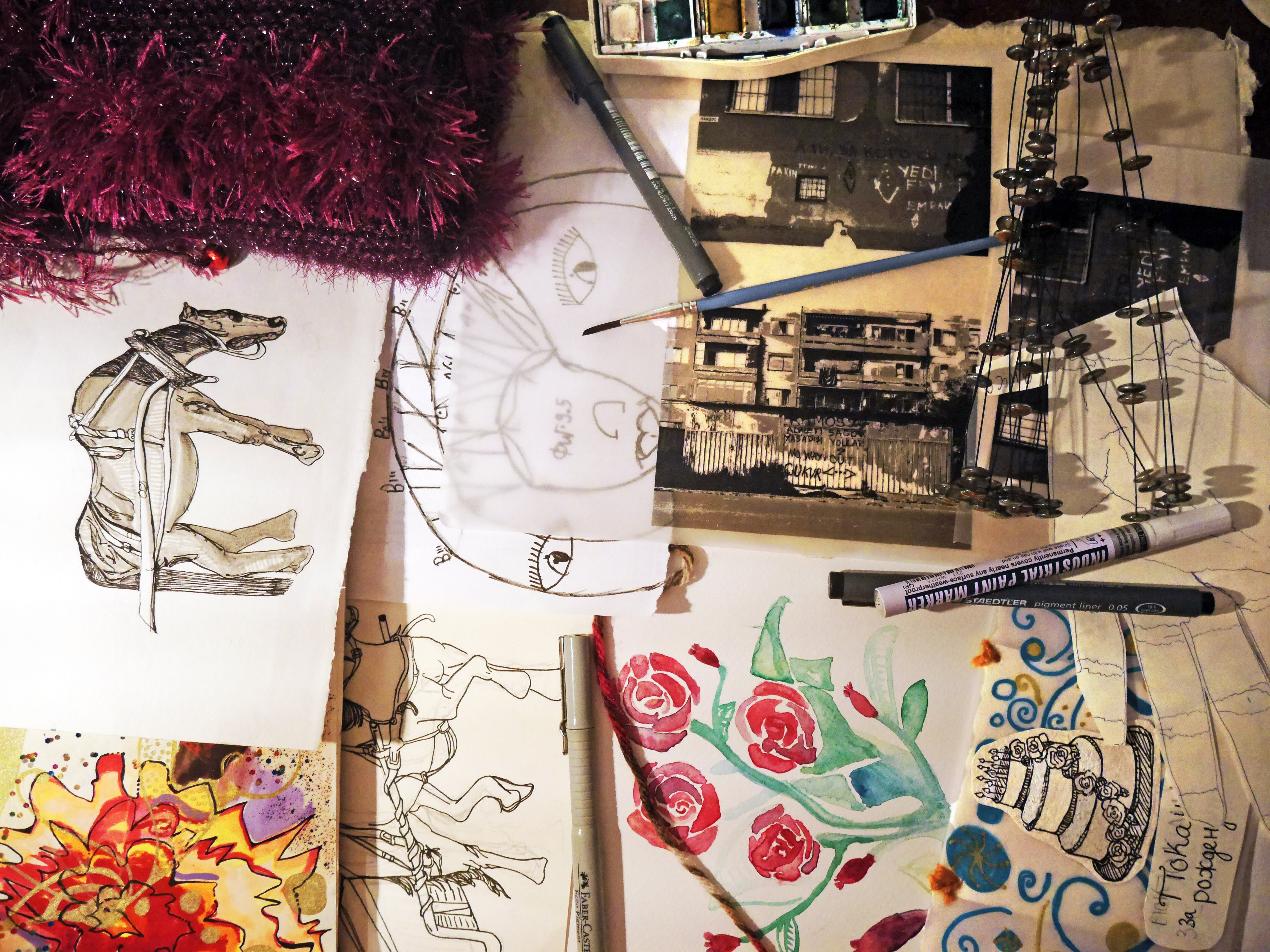
 Дуварколектив: социално ангажирано изкуство в Столипиново